
C5-C6 ACDF Neck Surgery After Car Accident:
A Houston Personal Injury Guide
Watch Our ACDF Surgery Video
What is a C5-C6 ACDF (Anterior Cervical Discectomy & Fusion)?
Neck injuries from car accidents can be severe. In some cases, trauma to the cervical spine (neck) is so significant that it requires surgical intervention. One common surgery is the Anterior Cervical Discectomy and Fusion (ACDF), often performed at the C5-C6 level of the neck. This educational resource is provided by Joel A. Gordon & Associates, a Houston personal injury law firm, explains what a C5-C6 ACDF is, why it’s performed (such as after trauma or disc herniation), and how it relates to personal injury claims. We’ll also cover what to expect during recovery and long-term outcomes. Whether you’re a prospective personal injury client who underwent neck surgery after car accident, a legal professional handling a spinal cord injury claim, or simply interested in the procedure, this guide will walk you through the essentials in a patient-friendly, legally focused manner.
Anterior Cervical Discectomy and Fusion (ACDF) is a neck surgery designed to relieve pressure on the spinal cord or nerves by removing a damaged disc and fusing the adjacent vertebrae. In a C5-C6 ACDF, the surgeon focuses on the disc between the 5th and 6th cervical vertebrae in your neck. The procedure is called “anterior” because the surgeon reaches the spine through a small incision in the front of the neck. During the surgery, the damaged or herniated disc is removed to eliminate pressure on nerve roots or the spinal cord, and then a bone graft or implant is inserted into the empty disc space. The surgeon often secures this with a plate and screws, effectively fusing the C5 and C6 vertebrae together for stability. By “welding” the bones into one solid piece, ACDF stabilizes that segment of the spine and prevents painful movement.
ACDF is a major surgery, but it’s also a common and generally safe procedure. According to Cleveland Clinic, about 132,000 ACDF surgeries are performed in the U.S. each year. Patients may lose a bit of neck flexibility because the two vertebrae are fused, but they typically gain significant relief from pain and nerve symptoms.
ACDF has a high success rate: studies show that 85–95% of patients experience substantial pain relief and improved function after the surgery. It’s important to note that ACDF is usually recommended only after conservative treatments (like physical therapy, medications, or injections) have failed to relieve the pain or neurological symptoms. In other words, doctors view ACDF as a last resort to fix serious neck problems.
Why is ACDF Performed? (Trauma, Herniated Discs, and More)
ACDF is typically performed to address serious spine issues that cause chronic neck pain, arm pain, numbness, or weakness. The common medical reasons for an ACDF include herniated discs, degenerative disc disease, and spinal stenosis (narrowing of the spinal canal). By removing a ruptured or bulging disc that is pinching nerves, ACDF can alleviate radiating arm pain and other symptoms. It’s also used to stabilize the spine in cases of vertebral fractures or instability.
A significant number of ACDF surgeries are the result of trauma from accidents, especially car crashes. In a high-impact collision (such as a rear-end crash or a heavy T-bone accident), the neck can whip back and forth violently (whiplash). This force may cause a cervical disc herniation or even fracture a vertebra. For example, a sudden impact can rupture the C5-C6 disc, causing the inner disc material to protrude and compress nearby nerves or the spinal cord. If the injured disc at C5-C6 presses on nerve roots, the victim might suffer severe neck pain, arm pain, tingling, or muscle weakness. When conservative treatments (rest, therapy, injections) don’t help, an ACDF surgery may be required to remove the damaged disc and fuse the spine, thereby relieving nerve pressure and pain.
Traumatic Injury (Car Accidents)
Car accidents are a common cause of cervical spine injuries that lead to ACDF. A serious crash can damage the C5-C6 disc or vertebrae, leading to herniation, instability, or spinal cord compression. ACDF is often needed to stabilize the neck after such trauma. In fact, neck surgery after car accident is sometimes not just a possibility, it becomes a medical necessity. Many severe rear-end or head-on collisions result in injuries at the C5-C6 or C6-C7 levels of the cervical spine.
Herniated or Degenerated Disc
ACDF is commonly performed for a herniated disc in the cervical spine. A herniated disc means the disc’s soft inner material has leaked or bulged out, pinching nerves and causing pain. Removing the problematic disc and fusing the vertebrae can relieve symptoms. It’s also used for degenerative disc disease when a worn-out disc causes chronic pain or nerve compression.
Spinal Cord or Nerve Compression
In some injuries, bone fragments from a fractured vertebra or misaligned vertebrae can press on the spinal cord or nerve roots. This compression can cause serious neurological issues (e.g. numbness, loss of function). ACDF may be recommended to decompress the spinal cord and prevent further neurological damage. For instance, if a C5-C6 fracture or dislocation from a crash threatens the spinal cord, surgeons might perform an ACDF to remove pressure on the cord and stabilize the spine.
Worsening of Pre-existing Conditions
Sometimes an accident doesn’t cause a brand-new injury but rather aggravates a pre-existing neck issue. For example, a person with mild degenerative disc disease at C5-C6 might have been symptom-free before, but a crash accelerates the disc damage or triggers acute symptoms. In such cases, what was once a dormant condition now requires surgical intervention like ACDF. The trauma essentially makes a latent condition urgent.
What to Expect During Recovery
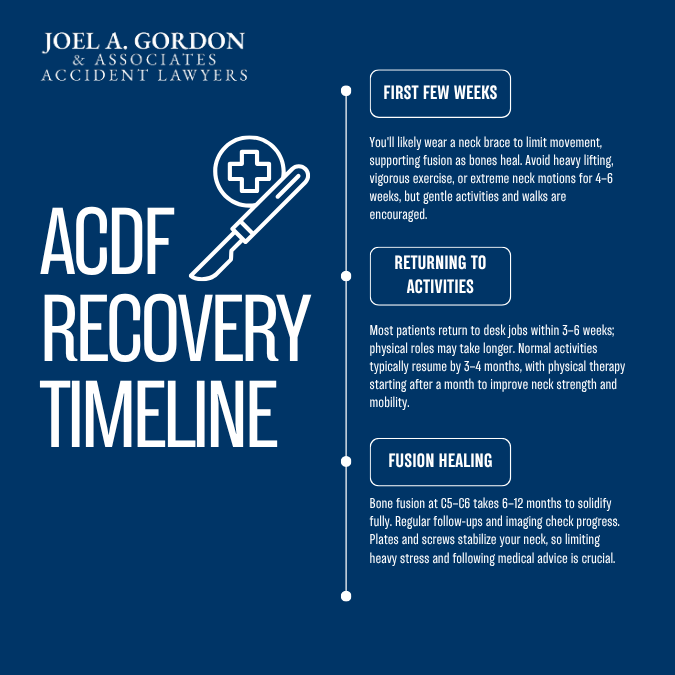
Recovery from ACDF occurs in stages and requires patience. Initially, you will have soreness in your neck and maybe a sore throat (because the surgery moves the esophagus and can cause swelling). Difficulty swallowing (dysphagia) is common in the first days or weeks, but this usually improves with time. Your doctor will prescribe pain medications to keep you comfortable in the immediate post-op period.
Many patients experience significant improvement in their symptoms relatively soon after ACDF. For instance, the arm pain or numbness caused by the pinched nerve often improves almost immediately after surgery, since the pressure on the nerve has been removed. You can expect some post-surgical neck pain, but it is usually manageable and subsides as you heal. By a few months out, most people can live a normal life after ACDF, with dramatically less pain than before. You might notice your neck is a bit stiffer or less flexible (since C5-C6 no longer moves), but this is often a small change – about a 5-10% loss of motion per level fused, which many patients don’t even feel in daily life. Over time, the scar softens, swallowing returns to normal, and you gain confidence in your neck’s strength.
Long-Term Outcomes and Prognosis After ACDF
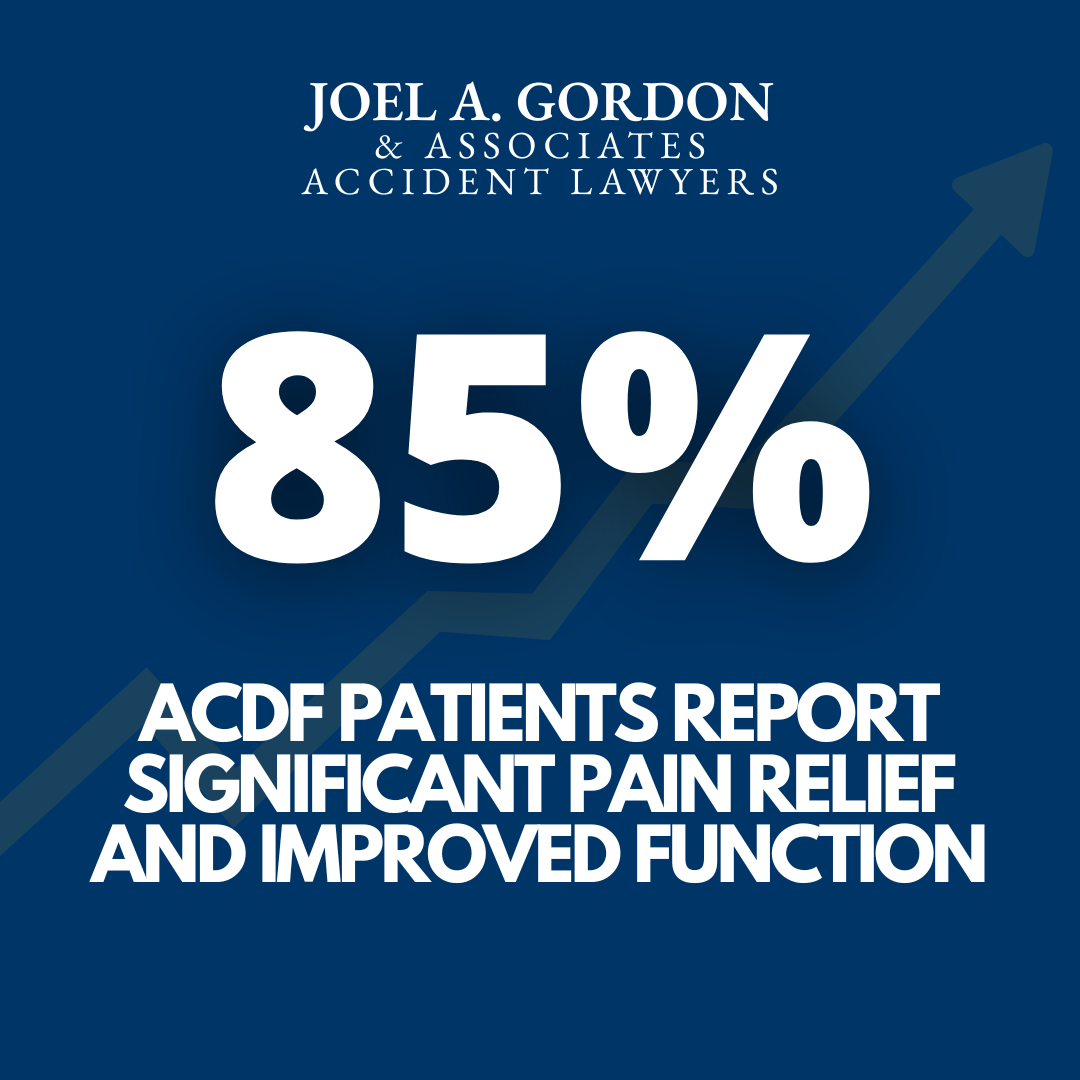
Long-term, ACDF is considered a successful surgery for most people. As mentioned, over 85% of ACDF patients report significant pain relief and improved function in the years following the procedure. By stabilizing the spine and removing pressure on nerves, ACDF often allows individuals to return to work, hobbies, and regular daily activities once fully healed. Many patients who had debilitating arm pain or weakness find that those symptoms are gone or much reduced after the fusion.
Permanent Changes
ACDF reduces neck flexibility slightly at fused segments, mainly limiting forward-bending motion. Most daily tasks remain unaffected, as adjacent joints compensate for lost mobility.
Risks of Adjacent Segment Issues
ACDF surgery carries a 10–15% risk of needing another surgery within 10–15 years due to added stress on neighboring segments, possibly accelerating degeneration there.
Chronic Pain or Complications
Most ACDFs succeed, but some patients may experience persistent pain or stiffness. Rare complications like non-fusion or nerve damage can affect long-term quality of life.
Overall Quality of Life
Post-ACDF, most resume normal activities with lasting pain relief. Studies show sustained improvements even decades later, greatly enhancing overall quality of life despite minor trade-offs.
Implications for Personal Injury Claims
If your ACDF was necessitated by an accident, the long-term outcomes tie directly into your legal case. For example, if you have permanent limitations (like reduced range of motion or lingering pain) after the surgery, these would be considered when seeking compensation for pain and suffering or loss of quality of life. Additionally, the possibility of future treatments (like another surgery down the line due to adjacent segment issues) should be factored into any settlement or award. A knowledgeable attorney will argue for covering future medical costs and monitor your recovery to ensure any complication is documented as part of your claim.
Don’t wait! Give our team a call today! 877-213-5004
ACDF in the Context of Personal Injury Claims
Recovering Damages for ACDF Surgery in Houston, Texas
If you underwent C5-C6 ACDF due to an accident in Houston, you have the right to seek compensation from the at-fault party for all the consequences of that injury. Joel A. Gordon & Associates regularly handles spinal cord injury claims, neck and back injury cases, and other serious personal injuries in Houston and throughout Texas. We understand the wide-ranging impact a neck fusion surgery can have on your life. Some of the damages (compensable losses) you may recover in an ACDF-related personal injury case include medical expenses, lost wages, pain and suffering, loss of enjoyment, and future care.
Importantly, Texas follows a fault-based system for car accidents, and you generally have two years from the date of the accident to file a personal injury lawsuit (statute of limitations). If you have an ACDF surgery months after the accident, that clock is still ticking from the accident date, so it’s wise to consult with a personal injury attorney as soon as possible.
All past and future medical costs related to your neck injury and ACDF surgery. This covers emergency room visits, diagnostic tests (X-rays, MRIs), surgical fees, hospital bills, medications, physical therapy, follow-up appointments, and any medical equipment (like neck braces). If you will need future check-ups, pain management, or even another surgery years down the line due to the injury, those estimated costs should be included as well.
Income you lost because you couldn’t work during recovery, and any reduction in your ability to earn income moving forward. For example, if you had to use 8 weeks of unpaid leave, those lost earnings are damages. If your injury prevents you from performing the same job (say, a construction worker who can no longer do heavy lifting), you might claim the difference in income from a lighter-duty job or retraining. Long-term or permanent restrictions that affect your career are a significant part of the compensation calculation.
Monetary compensation for the physical pain and emotional distress you’ve endured. ACDF and its aftermath involve pain, discomfort, inconvenience, and possibly anxiety or depression from the trauma and life changes. Texas does not have a formula for pain and suffering; it’s typically based on the severity and duration of your suffering. Evidence might include your testimony about daily pain, medical notes on your condition, and statements from family on how your life was impacted.
If the injury and surgery caused you to miss out on important life events or give up activities you love (for instance, if you’re an avid cyclist and can’t ride for a long time, or you had to cancel a vacation), these losses can be described and factored into your claim. Similarly, any permanent limitations like not being able to engage in contact sports or having some reduced neck mobility are considered a diminution in your quality of life, and your lawyer will seek appropriate compensation for that loss.
In some cases, after a serious neck injury, you might need ongoing services – maybe you require periodic help around the house during recovery, or you need to travel to see a specialist. All reasonable costs that stem from the injury are part of your damages. If, for example, you’ll need periodic MRIs to monitor adjacent discs, or if there’s a likelihood of a future adjacent segment surgery, those are future medical damages to claim. Also, if you did have any complications (say, a second surgery due to non-fusion), that would amplify your medical costs and suffering, thus increasing the value of the claim.
Contact a Houston Personal Injury Lawyer
Joel A. Gordon & Associates will help you understand your rights and what alternatives you have in proceeding with a case